

This design case study documents how RoyPrints transforms travel photography into everyday objects through observation-led product design.
From experiments to everyday
Before RoyPrints was a brand, before limited editions, certificates of authenticity, or even the idea of Business Class, our designs lived in the margins of a completely different project.
My design journey didn’t begin with prints on walls, but with things people actually use. Back when my tech content brand, TechIsAmaze (TiA), was my main focus, I was already considering how to expand the brand beyond video content. Apparel and accessories were the obvious choices; many content creators were doing it, and slapping a logo on a t-shirt seemed simple enough.
Working with a shoestring budget, every decision mattered. We experimented with hoodies and t-shirts and, honestly, we liked the results. However, phone cases quickly became the clear winner: personal, practical, and always visible. They offered a way to build brand recognition through design, without feeling like a blatant advertisement.
Around this time, I discovered City pop; Japanese Pop from the 80s with warm, optimistic blends of retro-futurism and neon aesthetics at its core. Simultaneously, I was deep into learning Mandarin Chinese. Those two threads collided in our very first phone case design.
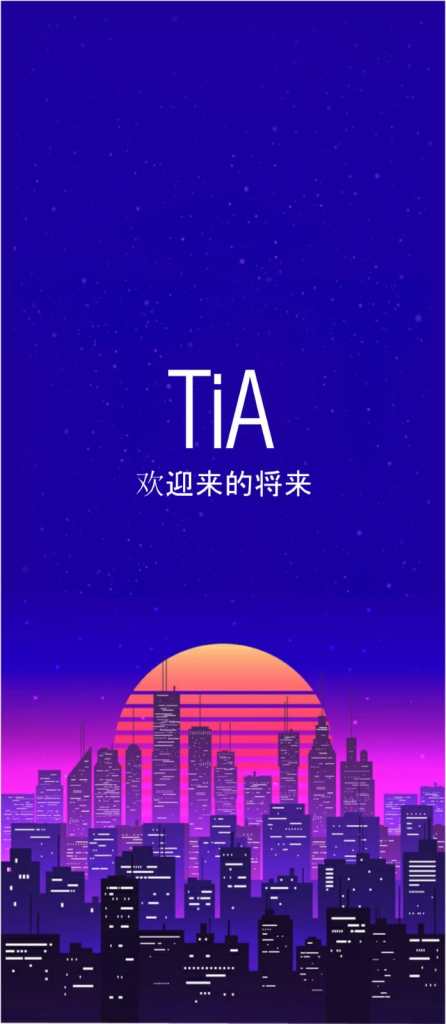
It wasn’t polished, nor was it particularly commercial, but it set the tone for what would eventually become RoyPrints: design rooted in travel, culture, and lived experience.
When RoyPrints began to take shape
As RoyPrints evolved from a hobby into a more intentional endeavour, revisiting the phone case concept felt natural, this time with photography as its focus.
In 2021, the prevailing visual trend was clear: minimalist black cases featuring a small Polaroid-style image floating in the centre. We explored that format too. On the surface, it worked. It looked familiar.

The black background, however, did no favors. All that empty space, and somehow the image felt smaller, tighter. The colours, from a neon-lit street in Hong Kong, simply dulled. What should have been vibrant felt muted. The photograph sat there, isolated, unable to carry the energy it was meant to.
From a distance, it looked fine. Passable, even. Up close, you could feel what was missing. The design was playing it safe, and safe doesn’t do justice to a street that used to pulse with light. Ironically, the street itself doesn’t carry that energy anymore either, the neon signs have since been taken down.
Finding the format
One late night, thanks to either jet lag or a complete lack of schedule, we stumbled onto a breakthrough while working through our Japan archive. We realised we could graphically extend landscape images into portrait formats of any height, without stretching, distorting, or diluting the original photograph. Kyoto at night became the test case.

Suddenly, phone cases made sense again. The image filled the frame. Our first true RoyPrints production case was born.
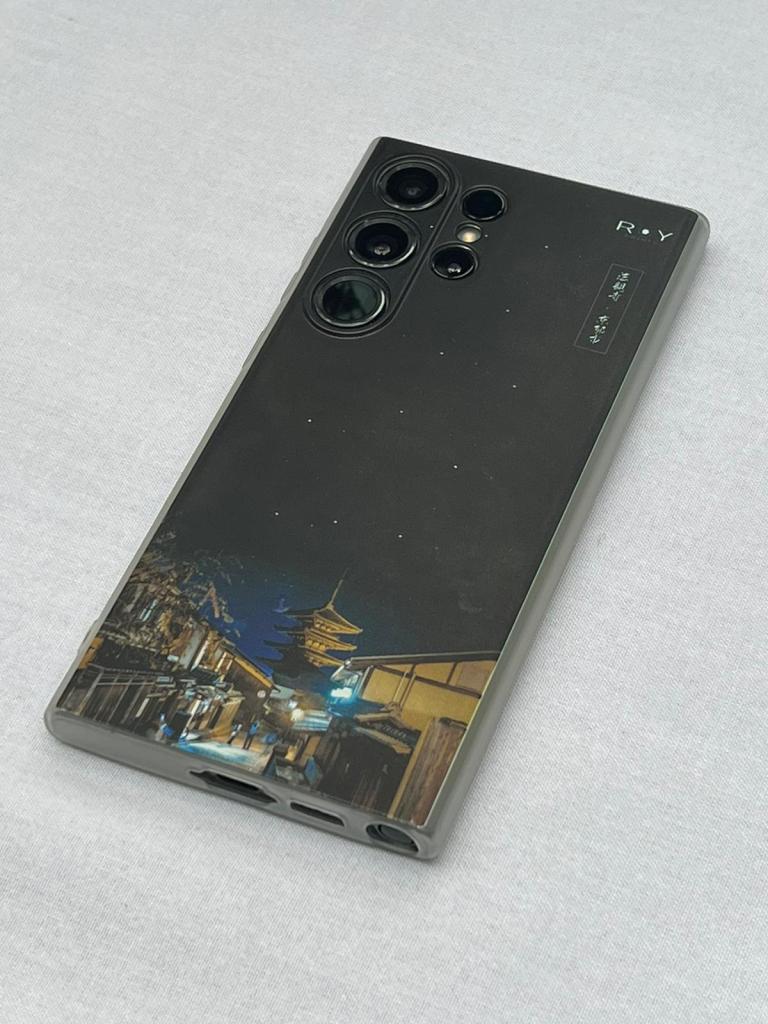
For a moment, it felt like we’d cracked it. The design worked, orders came in, and we had a format we could replicate. Then came a transatlantic flight that changed everything.
AA0051 — when the earth took over
Flying to Dallas–Fort Worth in mid-to-late February, halfway through the flight, sleep wasn’t on the cards. I looked out of the window and saw something I wasn’t prepared for. Frozen Canada stretched below. Lakes, fields, borders, all of it, at the same time you didn’t see any of that.
What you saw was the world’s largest porcelain artwork. Unintentional and quite literally wild by nature.
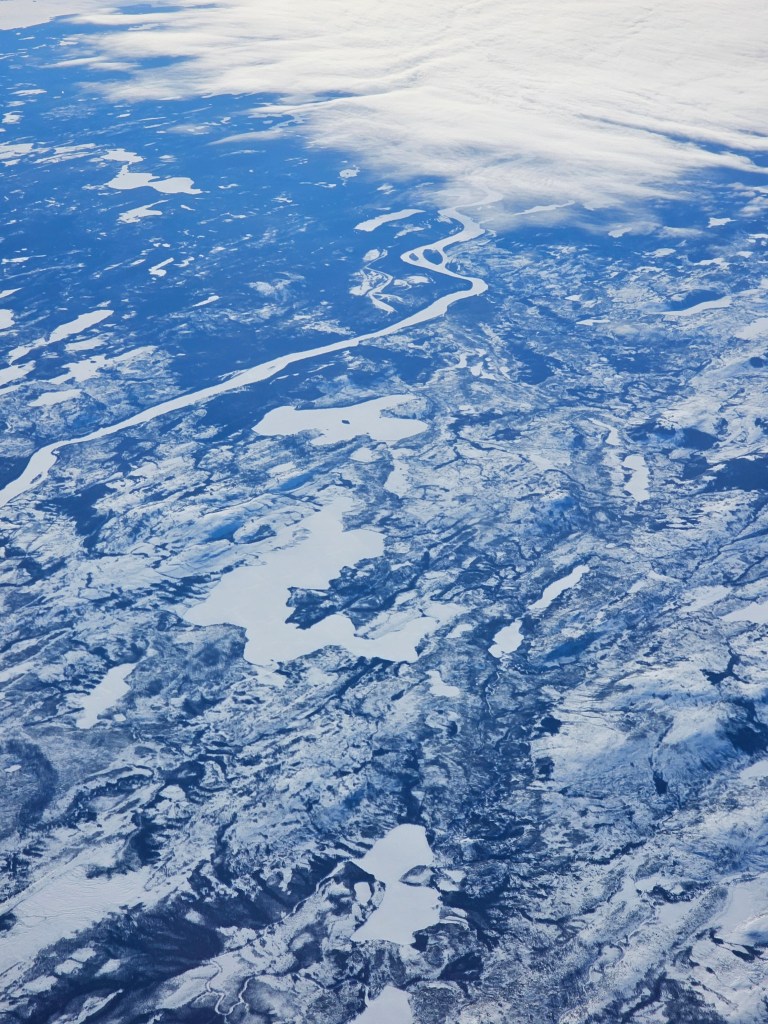

There was no skyline to anchor it. No reference point. The usual formula; monument at the base, logo in the corner, simply didn’t apply. The photograph carried itself.
Back home, we refined, edited, and released the next iteration. This design mattered more than most, precisely because it broke our own rules. The photograph was the design.
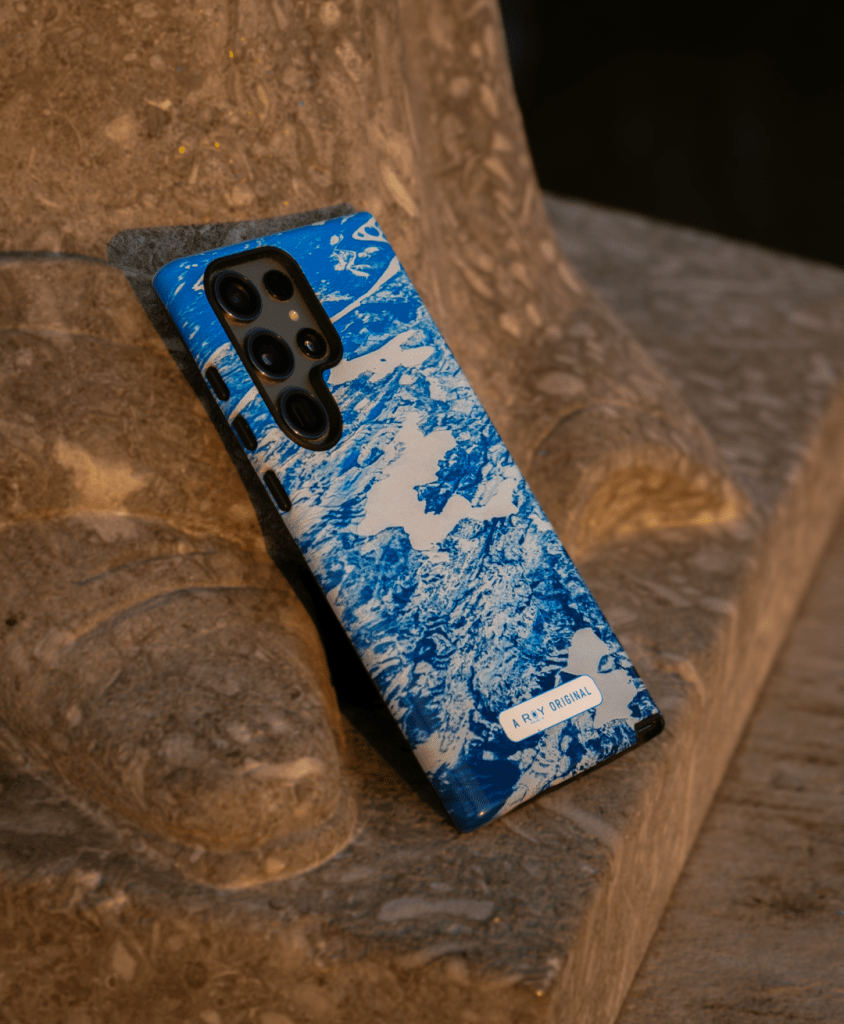
RoyPrints had started with cityscapes, expanded into landscapes, and now, almost accidentally, shifted its gaze upward. Out of the windows. Between destinations. Into moments you only get when you’re moving.
Where it stands today
The earth picked up the brush again more recently, this time just off the coast of Sri Lanka.
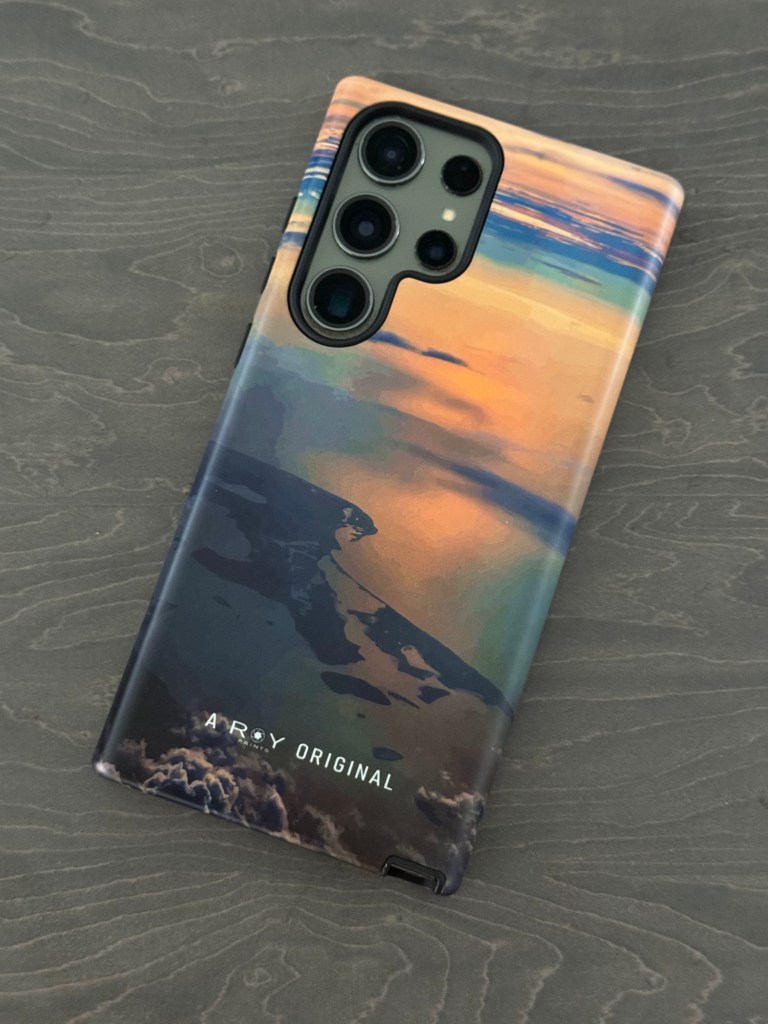
Ascending from CMB, the view out the window was Dutch Bay at sunset. The water catching the last rays of light, the kind of moment that exists for thirty seconds and then it’s gone. We adapted it into a painterly style to truly honour the emotion it evokes.
This one sits differently. It’s quieter than the frozen expanse over Canada, more deliberate than the Kyoto extension. It’s a reminder that the earth doesn’t need drama to be worth noticing. Sometimes it’s just generous with colour and timing, and you happen to be there.
There will be more. If anything, this is a quiet commitment to keep looking: out of windows, between places, at the overlooked compositions the world offers freely.
These designs exist because views like this deserve more than a click, save, and upload. A frozen landscape mid-flight, a coastline at golden hour, a temple framed by cherry blossoms, they happen once, in front of whoever’s aware enough to notice. You can photograph them, sure, but then what? They sit in a folder somewhere, occasionally resurfacing in a slideshow you’ll never make.
A phone case turns that moment into something you live with. It’s not about preserving a memory, it’s about giving the earth’s composition the audience it deserves. The world was doing something extraordinary while you were just trying to get somewhere else. This way, it gets to stick around.
Our role is simply to notice, and occasionally, give these moments a form worth carrying. Think of them as a fragment of our journey.
Business Class, by design
Due to their made-to-order nature, RoyPrints phone cases are available exclusively to RoyPrints: Business Class members.
Business Class exists to enable access: slower design cycles, smaller runs, and products crafted out of artistic intent over scalability. We never charge to join. The only limitation is the editions themselves, 100 pieces per product type.
If you’d like to own a piece of this journey, you can apply for Business Class membership and place orders through the members’ portal.
We’ll be here, still looking out the window.

Founder and Creative Director of RoyPrints, a travel photography brand turning original images from Europe and Asia into limited-run crossbody bags, apparel, and accessories. Often found in the depths of China with no signal but unlimited views.