
-
Art of the Earth: A (Phone) Case Study

This design case study documents how RoyPrints transforms travel photography into everyday objects through observation-led product design.
From experiments to everyday
Before RoyPrints was a brand, before limited editions, certificates of authenticity, or even the idea of Business Class, our designs lived in the margins of a completely different project.
My design journey didn’t begin with prints on walls, but with things people actually use. Back when my tech content brand, TechIsAmaze (TiA), was my main focus, I was already considering how to expand the brand beyond video content. Apparel and accessories were the obvious choices; many content creators were doing it, and slapping a logo on a t-shirt seemed simple enough.
Working with a shoestring budget, every decision mattered. We experimented with hoodies and t-shirts and, honestly, we liked the results. However, phone cases quickly became the clear winner: personal, practical, and always visible. They offered a way to build brand recognition through design, without feeling like a blatant advertisement.
Around this time, I discovered City pop; Japanese Pop from the 80s with warm, optimistic blends of retro-futurism and neon aesthetics at its core. Simultaneously, I was deep into learning Mandarin Chinese. Those two threads collided in our very first phone case design.
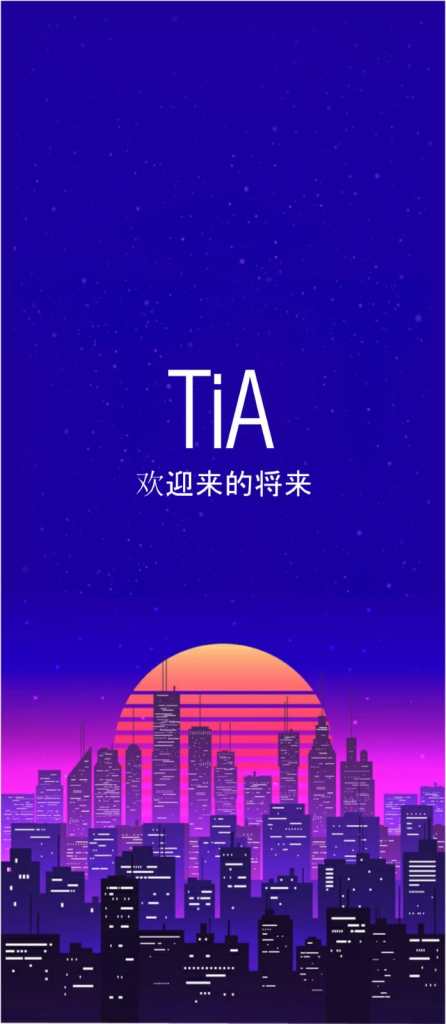
The first T.I.A Phone Case It wasn’t polished, nor was it particularly commercial, but it set the tone for what would eventually become RoyPrints: design rooted in travel, culture, and lived experience.
When RoyPrints began to take shape
As RoyPrints evolved from a hobby into a more intentional endeavour, revisiting the phone case concept felt natural, this time with photography as its focus.
In 2021, the prevailing visual trend was clear: minimalist black cases featuring a small Polaroid-style image floating in the centre. We explored that format too. On the surface, it worked. It looked familiar.

The first RoyPrints Case The black background, however, did no favors. All that empty space, and somehow the image felt smaller, tighter. The colours, from a neon-lit street in Hong Kong, simply dulled. What should have been vibrant felt muted. The photograph sat there, isolated, unable to carry the energy it was meant to.
From a distance, it looked fine. Passable, even. Up close, you could feel what was missing. The design was playing it safe, and safe doesn’t do justice to a street that used to pulse with light. Ironically, the street itself doesn’t carry that energy anymore either, the neon signs have since been taken down.
Finding the format
One late night, thanks to either jet lag or a complete lack of schedule, we stumbled onto a breakthrough while working through our Japan archive. We realised we could graphically extend landscape images into portrait formats of any height, without stretching, distorting, or diluting the original photograph. Kyoto at night became the test case.

The process of extending a landscape image graphically, what we call FLEXI-RES today Suddenly, phone cases made sense again. The image filled the frame. Our first true RoyPrints production case was born.
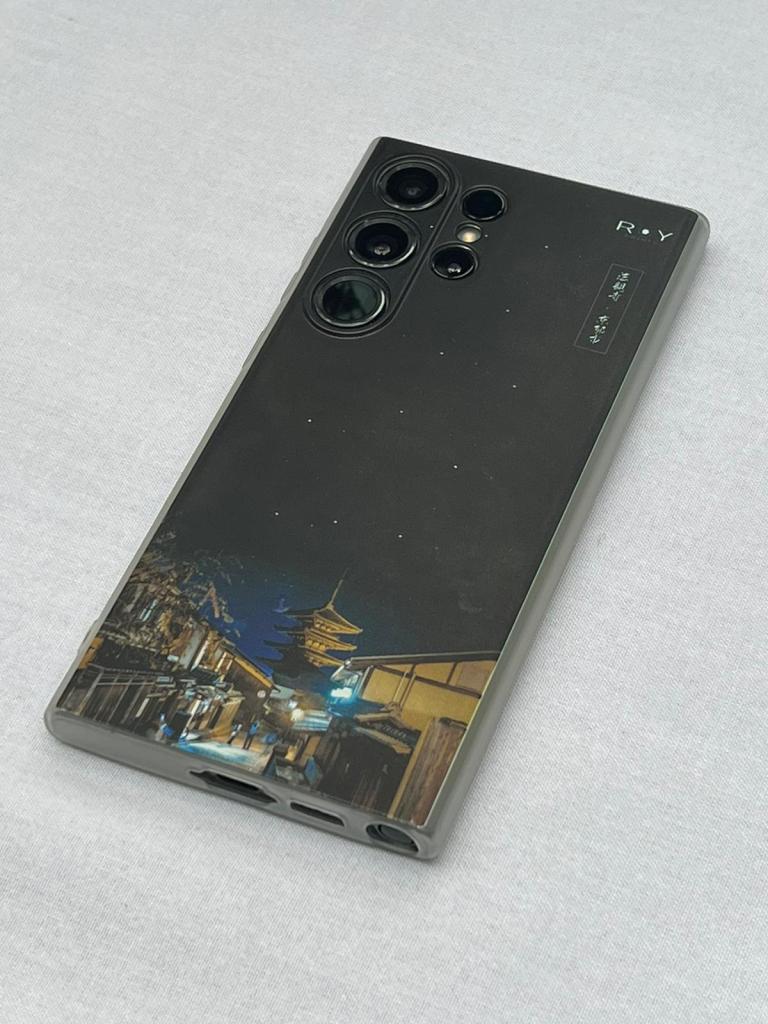
The new design in a physical case sample For a moment, it felt like we’d cracked it. The design worked, orders came in, and we had a format we could replicate. Then came a transatlantic flight that changed everything.
AA0051 — when the earth took over
Flying to Dallas–Fort Worth in mid-to-late February, halfway through the flight, sleep wasn’t on the cards. I looked out of the window and saw something I wasn’t prepared for. Frozen Canada stretched below. Lakes, fields, borders, all of it, at the same time you didn’t see any of that.
What you saw was the world’s largest porcelain artwork. Unintentional and quite literally wild by nature.
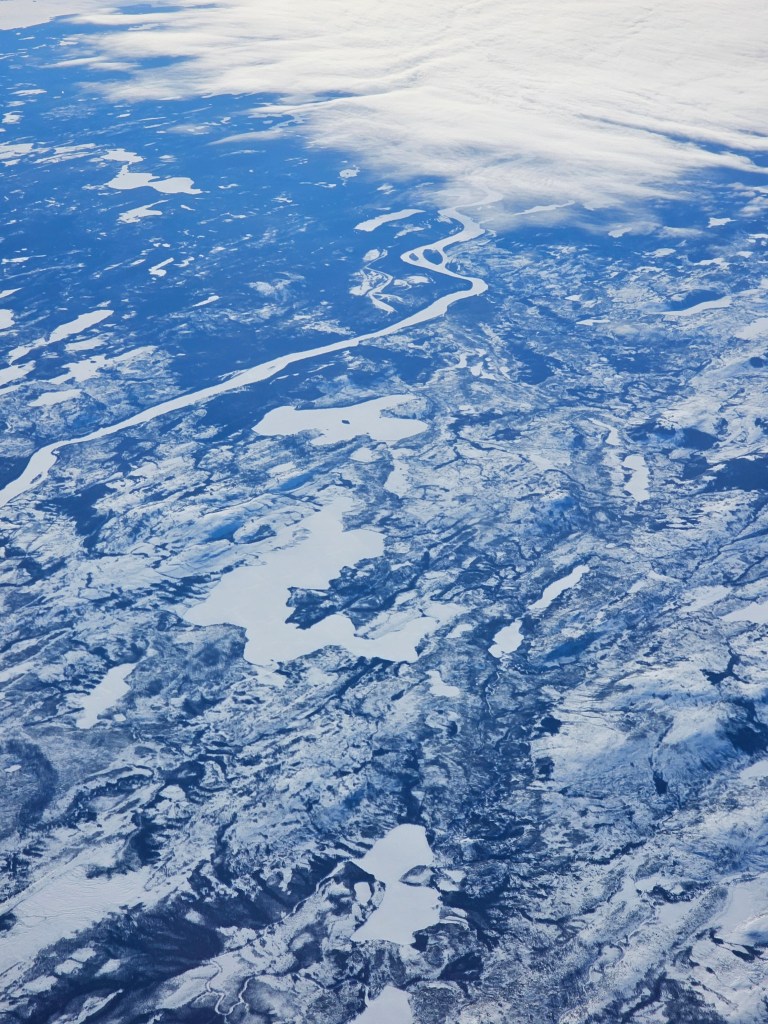

There was no skyline to anchor it. No reference point. The usual formula; monument at the base, logo in the corner, simply didn’t apply. The photograph carried itself.
Back home, we refined, edited, and released the next iteration. This design mattered more than most, precisely because it broke our own rules. The photograph was the design.
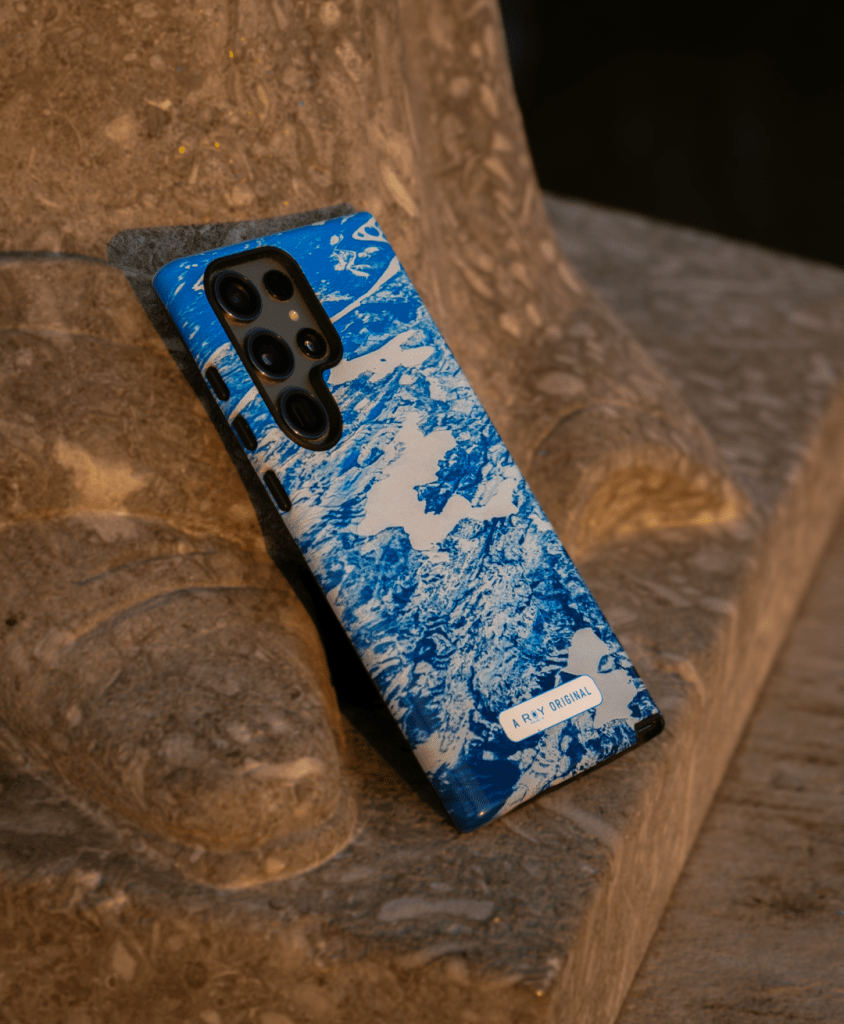
Art of The Earth : Porcelain Design RoyPrints had started with cityscapes, expanded into landscapes, and now, almost accidentally, shifted its gaze upward. Out of the windows. Between destinations. Into moments you only get when you’re moving.
Where it stands today
The earth picked up the brush again more recently, this time just off the coast of Sri Lanka.
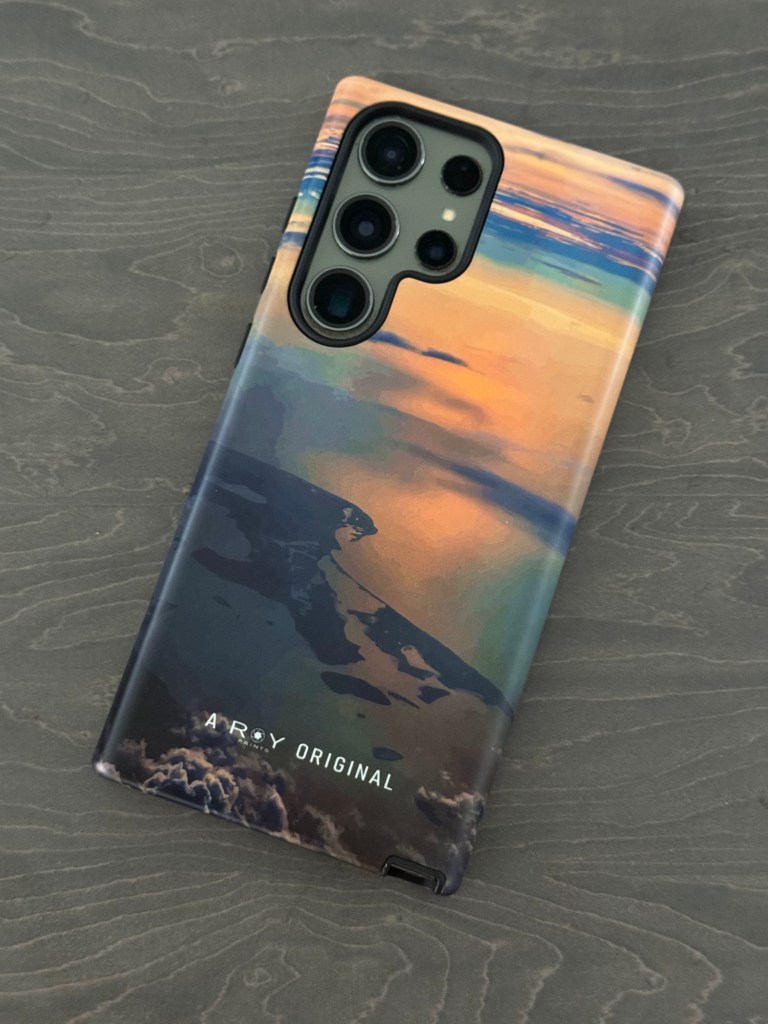
Art of the Earth : Sri Lanka Sunset Ascending from CMB, the view out the window was Dutch Bay at sunset. The water catching the last rays of light, the kind of moment that exists for thirty seconds and then it’s gone. We adapted it into a painterly style to truly honour the emotion it evokes.
This one sits differently. It’s quieter than the frozen expanse over Canada, more deliberate than the Kyoto extension. It’s a reminder that the earth doesn’t need drama to be worth noticing. Sometimes it’s just generous with colour and timing, and you happen to be there.
There will be more. If anything, this is a quiet commitment to keep looking: out of windows, between places, at the overlooked compositions the world offers freely.
These designs exist because views like this deserve more than a click, save, and upload. A frozen landscape mid-flight, a coastline at golden hour, a temple framed by cherry blossoms, they happen once, in front of whoever’s aware enough to notice. You can photograph them, sure, but then what? They sit in a folder somewhere, occasionally resurfacing in a slideshow you’ll never make.
A phone case turns that moment into something you live with. It’s not about preserving a memory, it’s about giving the earth’s composition the audience it deserves. The world was doing something extraordinary while you were just trying to get somewhere else. This way, it gets to stick around.
Our role is simply to notice, and occasionally, give these moments a form worth carrying. Think of them as a fragment of our journey.
Business Class, by design
Due to their made-to-order nature, RoyPrints phone cases are available exclusively to RoyPrints: Business Class members.
Business Class exists to enable access: slower design cycles, smaller runs, and products crafted out of artistic intent over scalability. We never charge to join. The only limitation is the editions themselves, 100 pieces per product type.
If you’d like to own a piece of this journey, you can apply for Business Class membership and place orders through the members’ portal.
We’ll be here, still looking out the window.
-
The Silence of the Brands

Your expensive marketing campaign might be failing. Not because your messaging is wrong, but because your imagery is saying nothing at all.
The evidence is everywhere: scroll through travel websites and you’ll see the same generic skylines and beach sunsets. Check tech company homepages and find the same neon blue lines overlaid on top of a generic skyline. Browse financial services sites and encounter the same monochrome collage of skyscrapers. Whether you’re selling vacation packages, software, or investment portfolios, everyone’s ordering from the same visual menu, and wondering why everything tastes the same.
The culprit? Getty Images, Shutterstock, and their countless competitors have essentially created a corporate aesthetic monoculture. It’s economically efficient, sure, but it’s also impossible to stand out when everyone’s pulling from the same catalog.
Some marketing departments are waking up, including flagship brands at the scale of Singapore Airlines. They’re quietly reallocating their creative budgets away from stock photography libraries toward custom imagery, crawling out of the grey and back into the limelight. The reason is simple: aesthetics drive economics. Companies investing in authentic visuals are consistently outperforming those relying on generic photos, and the performance gap is widening as audiences become more discerning.
The numbers back this up in ways that matter to the bottom line. One company we know of saw their monthly revenue jump $10,000 after ditching stock photography for authentic imagery. That’s not just about prettier pictures, it’s about building something that compounds over time. Custom photos have staying power because they help establish brand recognition and emotional connection that generic stock images simply cannot achieve.
When 70% of companies now invest in content marketing that often relies on professional photography, the brands winning are those treating imagery as a strategic asset, not a commodity purchase. The math is straightforward: distinctive visuals create scarcity value, and scarcity drives premium pricing.

Leftmost Image : RAW Photograph of Avatar Mountains in Zhangjiajie
Middle Image : Photo after full editing
Rightmost Image : Photo transformed into IllustrationAfter years of travel photography across tech and travel sectors, we’ve learned this: getting the authentic shot matters, but it’s the craft that follows which creates unforgettable work.
Last month, we climbed to remote mountain peaks at 5am to capture imagery that no stock library could offer. Then came hours of meticulous editing, applying cultural knowledge to transform the photograph into a custom illustration to tell a story no other brand can claim. It’s the difference between shopping off the rack and commissioning something that fits only you, creating a visual identity that’s inherently scarce and valuable.
Hey, what about Gen AI Images? To which I say, your answer is in its name. It’s all artificial. At first glance, AI-generated imagery seems ideal: fast, easy, endlessly customizable with comparatively low effort. Yet, at the end of the day, AI is AI. It’s not real, and increasingly, people can tell. Academic research shows that consumers can identify a fake image 68–71% of the time. That ancient temple with windows that don’t line up and stairs leading nowhere? We can see the architectural nonsense.
AI can’t produce art that resonates culturally with an audience unless explicitly instructed to mimic it. It can’t replicate the artist’s blend of passion and precision that comes from years of dedication to the craft. This isn’t just about arranging pretty colours, it’s about a commitment to excellence that shows in every frame. AI can’t create the thousands of small, imperfect details that make an image feel genuine, the slight overexposure that captures mood, the unexpected composition born from being present in the moment, the cultural instinct that can’t be programmed.
Ultimately, it’s not real. The brands that thrive, will be those that double down on human creativity, real experiences, and genuine effort. Sometimes the best strategy is the one that doesn’t scale.
The market signals are clear. Industry data shows authentic imagery generates more positive consumer response than stock photography, with the gap widening as digital literacy spreads across demographics. Companies investing in location-specific, culturally-informed visual content are establishing competitive advantages that become more valuable over time.
As stock photography libraries and AI generators saturate the market with generic imagery, the scarcity value of genuine, irreplicable content increases proportionally.
It’s not about what authentic imagery costs, it’s about what being generic costs you.
AI Generated Images Marketing, AI Image Detection, AI Images vs Real Photography, Anti-Stock Photography Movement, Authentic Content 2025, Authentic Marketing Imagery, Authentic vs Generic Imagery, Brand Differentiation Strategy, Brand Recognition Photography, Brand Visual Strategy 2025, Corporate Visual Identity, Culturally Informed Imagery, Custom Brand Photography, Custom Illustration Design, Custom Photography Investment, Custom Visual Assets, Financial Services Marketing, Gen AI Marketing Risks, Generic Marketing Problem, Location-Specific Photography, Luxury Brand Photography, Marketing Photography ROI, Stock Photography Alternatives, Tech Company Branding, Travel Marketing Visuals, Travel Photography Marketing, Visual Brand Identity, Visual Content Marketing, Visual Scarcity Marketing, Why Stock Photography Fails